

7 Things to Consider Before Buying Institutional Furniture
The quality of an educational environment isn't determined by technology or infrastructure alone. The furniture used every day also plays a significant role in creating spaces where students can learn comfortably and teachers can work efficiently.
Whether you're setting up a new school, renovating classrooms, or expanding a college campus, choosing the best institutional furniture requires careful planning. The wrong furniture can lead to uncomfortable learning spaces, higher maintenance costs, and frequent replacements. On the other hand, investing in well-designed furniture creates classrooms that are functional, organized, and built to last.
Before making your next purchase, consider these seven expert tips to ensure your institution invests in furniture that delivers long-term value.
1. Understand Your Institution's Requirements First
Every educational institution has different requirements. Furniture suitable for a primary school classroom may not meet the needs of a university lecture hall or a coaching institute.
Before selecting furniture, evaluate:
- Age group of students
- Classroom size and layout
- Number of students per classroom
- Teaching methods
- Available storage space
Understanding these factors helps you choose furniture that supports both students and educators while making the best use of available space.
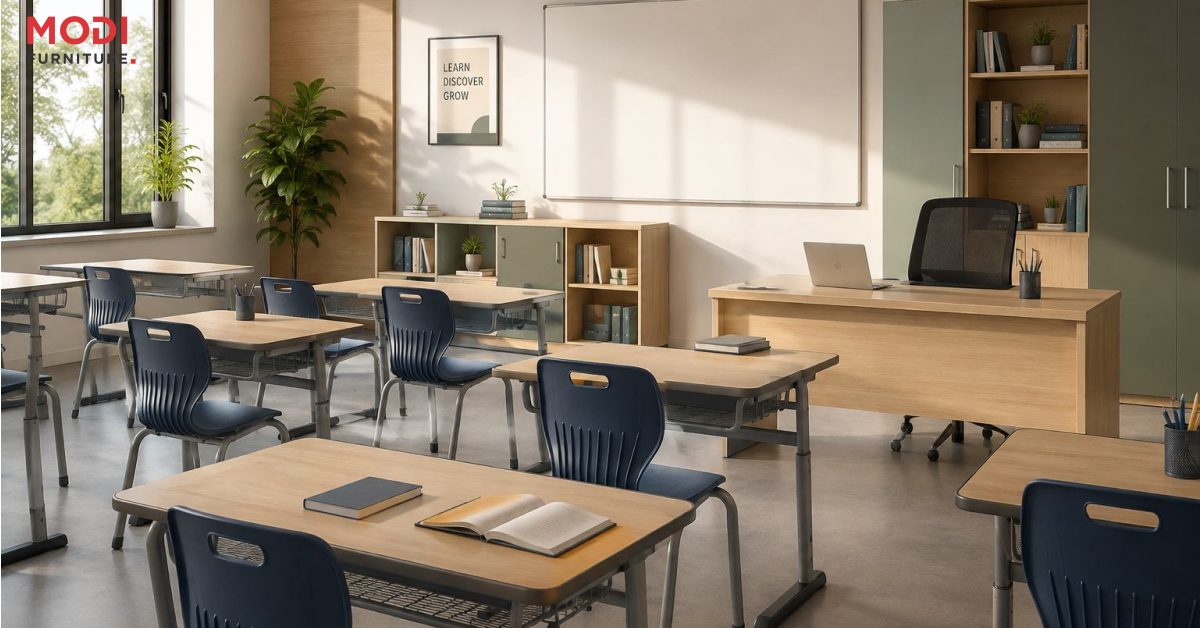
For example, classrooms may require durable School Furniture, while libraries, laboratories, and administrative offices often need specialized furniture designed for specific functions.
2. Prioritize Durability Over Initial Cost
Institutional furniture experiences daily use by hundreds of students throughout the academic year. Choosing furniture based solely on price may seem economical initially, but lower-quality products often require frequent repairs or replacement.
Look for furniture manufactured using durable materials with strong construction and quality finishes. A well-built desk or chair not only withstands everyday use but also reduces long-term maintenance expenses.
Instead of asking, "Which furniture is cheaper?" ask, "Which furniture will still perform well five years from now?"
Long-term durability almost always provides better value than short-term savings.
3. Choose Furniture That Supports Comfort and Productivity
Students spend several hours every day sitting in classrooms. Comfortable furniture helps them stay focused, reduces fatigue, and creates a better learning experience.
When evaluating institutional furniture, consider:
- Comfortable seating height
- Proper desk dimensions
- Sufficient legroom
- Stable construction
- Smooth finishes
Similarly, teachers and administrative staff also benefit from ergonomic seating solutions. Pairing workstations with Ergonomic Chairs can improve comfort during long working hours while promoting better posture.
Comfort should never be considered a luxury—it's an essential part of creating productive learning environments.
4. Consider Flexibility for Different Learning Spaces
Modern educational institutions are moving beyond traditional classroom layouts. Today's learning environments often include collaborative classrooms, libraries, seminar halls, computer labs, and activity rooms.
Choosing flexible furniture makes it easier to adapt these spaces for different teaching methods and group activities.
Furniture that offers modular designs or can be easily rearranged provides institutions with greater versatility without requiring major infrastructure changes.
Similarly, combining desks with practical Storage Furniture helps keep classrooms organized while maximizing available space.
5. Evaluate the Available Space Before Finalizing Furniture
One of the most common mistakes institutions make is selecting furniture without considering the available space. While larger desks and storage units may seem practical, they can make classrooms feel overcrowded and restrict movement.
Before placing an order, evaluate the room dimensions, seating capacity, and walking space. The furniture should allow teachers to move around comfortably while giving students enough room to sit and interact without feeling cramped.
For institutions with limited space, modular layouts and compact furniture can significantly improve classroom efficiency without compromising functionality.
6. Look for Customization Options
Every educational institution has unique requirements. A primary school classroom, a college lecture hall, and a vocational training center all require different furniture configurations.
Working with a manufacturer that offers customization allows you to choose furniture based on:
- Classroom dimensions
- Student age groups
- Storage requirements
- Material preferences
- Colors and finishes
- Seating capacity
Customized Study Tables , classroom desks, and storage solutions ensure that every space is designed for its intended purpose instead of relying on standard, one-size-fits-all furniture.
7. Choose a Trusted Institutional Furniture Manufacturer
The quality of your furniture depends not only on the product itself but also on the manufacturer behind it. An experienced manufacturer understands the needs of educational institutions and can recommend solutions that balance durability, functionality, and aesthetics.
Before making a decision, consider:
- Industry experience
- Product quality standards
- Manufacturing capabilities
- Customization options
- Delivery timelines
- Installation support
- After-sales service
Choosing the right partner ensures your investment continues to deliver value for years while reducing maintenance and replacement costs.
Final Thoughts
Institutional furniture is a long-term investment that influences the learning experience, classroom organization, and overall functionality of an educational facility. While design and budget are important, factors such as durability, comfort, storage, space planning, and customization should always be part of the decision-making process.
By carefully evaluating these seven considerations, schools, colleges, universities, coaching centers, and training institutes can create learning environments that are comfortable, efficient, and built to support students and educators alike.
At Modi Furniture, we offer a wide range of institutional furniture designed to meet the evolving needs of educational institutions. From School Furniture and Study Tables to Storage Furniture, Steel Almirahs, and Ergonomic Chairs, our solutions combine quality craftsmanship with practical functionality to help create modern learning spaces.
Frequently Asked Questions
1. What is institutional furniture?
Institutional furniture refers to furniture specifically designed for schools, colleges, universities, training centers, libraries, laboratories, and other educational or public institutions. It is built to withstand regular use while ensuring comfort, safety, and functionality.
2. Why is durability important when buying institutional furniture?
Educational furniture is used daily by multiple users, making durability essential. High-quality furniture reduces maintenance costs, minimizes replacements, and provides better long-term value.
3. Should educational institutions choose customized furniture?
Yes. Customized furniture allows institutions to optimize classroom layouts, accommodate different age groups, improve space utilization, and meet specific functional requirements.
4. What materials are best for institutional furniture?
The ideal material depends on the application. High-quality wood, engineered wood, steel, and powder-coated metal are commonly used because they offer durability, easy maintenance, and long service life.
5. How do I choose the right institutional furniture manufacturer?
Look for a manufacturer with experience, proven product quality, customization capabilities, reliable delivery, installation support, and responsive after-sales service to ensure a successful long-term investment.
-

School Furniture Checklist: Everything Needed for a Modern School
September 16th, 2026 -
Classroom Furniture Guide: Choosing the Right Furniture for Schools
September 2nd, 2026 -

Modern Office Tables in Jaipur: A Guide to Premium Workspace Solutions
August 19th, 2026 -
 July 27th, 2026
