

School Furniture Checklist: Everything Needed for a Modern School
Setting up a modern school involves much more than placing desks and chairs inside classrooms. Every area, from classrooms and libraries to laboratories and staff rooms, requires furniture designed for a specific purpose. Choosing the right school furniture helps institutions create comfortable, organized, safe, and functional spaces for both students and staff.
For schools planning a new campus, renovating existing facilities, or replacing old furniture, a proper checklist can make purchasing decisions much easier. This guide covers the essential furniture required across different areas of a modern school.
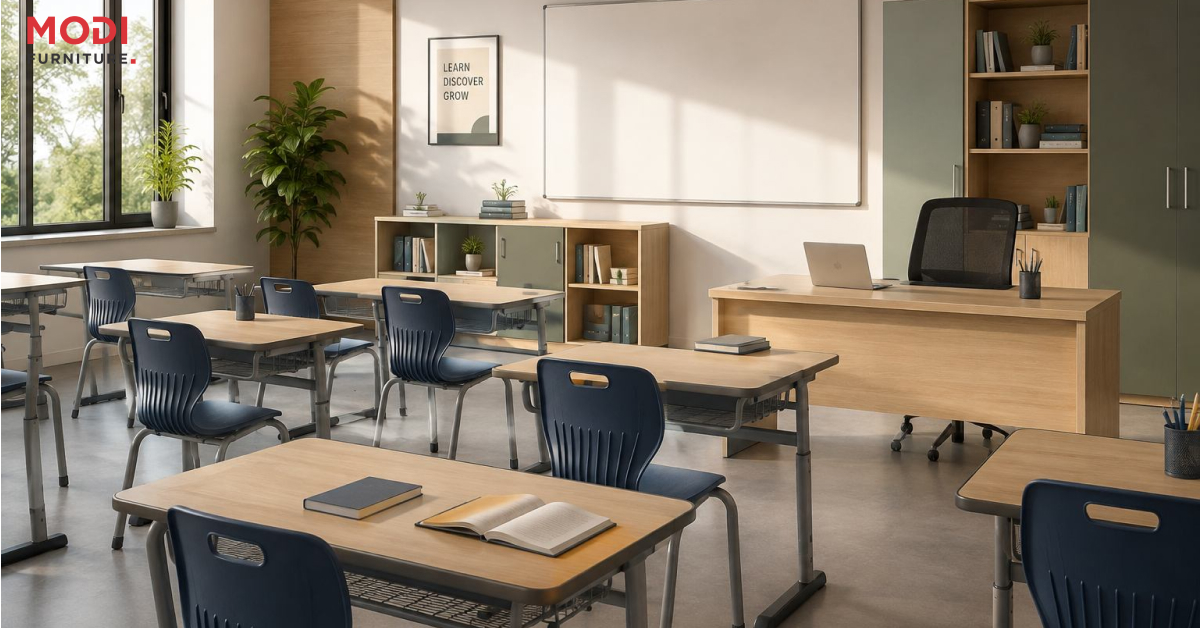
1. Classroom Desks and Benches
Desks and benches are among the most important pieces of classroom furniture because students use them throughout the school day.
The right configuration depends on student age, classroom dimensions, seating capacity, and teaching style. Schools may choose single-seater desks for individual learning or dual-seater desks and benches where shared seating is more practical.
When selecting classroom desks and benches, schools should consider:
- Student-friendly height and dimensions
- Sufficient writing space
- Strong and stable construction
- Smooth and safe edges
- Comfortable seating
- Easy-to-clean surfaces
- Storage space where required
- Efficient use of classroom floor space
Furniture should also leave enough room between rows for students and teachers to move comfortably.
2. School Chairs
Different areas of a school may require different types of school chairs. While integrated desk-and-bench combinations work well in many classrooms, separate chairs are useful for activity rooms, libraries, computer labs, training areas, and multipurpose spaces.
For younger students, chairs should be appropriately sized and easy to handle. Older students generally require larger and more supportive seating suitable for longer study periods.
Durability is equally important because school chairs are used and moved frequently throughout the academic year.
3. Student Study Desks
Some learning environments require individual study desks rather than conventional classroom benches. These can be particularly useful for focused learning, examinations, senior classes, libraries, and individual study areas.
A good study desk for students should provide sufficient space for books, notebooks, stationery, and other learning essentials while maintaining a comfortable seating position.
Schools should consider the available space, student age group, desk dimensions, material, durability, and storage requirements before selecting a design.
4. Teacher Tables and Chairs
Teachers also need a dedicated and organized workspace inside the classroom.
A teacher's table should provide sufficient room for lesson plans, registers, laptops, stationery, and other teaching materials. Depending on the available space, schools can also include drawer storage or a small pedestal for frequently used documents.
A basic teacher furniture setup can include:
- Teacher table
- Comfortable chair
- Drawer or pedestal unit
- Small storage cabinet
Keeping teaching materials organized can help maintain a clutter-free classroom.
5. Classroom Storage Furniture
Books, stationery, teaching aids, project materials, student records, and classroom supplies all require proper storage.
Cupboards, cabinets, shelves, lockers, and storage units can help schools organize these materials while making better use of available space.
Schools should first identify what will be stored and who needs access to it. Open shelving can work well for frequently used classroom materials, while lockable cabinets may be more suitable for documents, equipment, and items requiring controlled access.
6. Library Furniture
A school library needs furniture that supports reading, individual study, group learning, and organized book storage.
The basic furniture requirements for a school library may include:
- Reading tables
- Library chairs
- Bookshelves
- Book display racks
- Storage cabinets
- Individual study areas
- Librarian desk and chair
The layout should provide enough space between tables and shelves for easy movement. Bookshelves should also be positioned at practical heights so students can comfortably access books appropriate for their age group.
7. Computer Lab Furniture
A computer lab has very different furniture requirements from a standard classroom.
Computer tables and workstations need sufficient space for monitors, keyboards, CPUs or other devices while keeping the work area comfortable for students. Cable management should also be considered while planning the layout.
Depending on the room size and number of computers, schools can choose individual computer tables, continuous workstations, or shared configurations.
The goal should be to provide sufficient working space without overcrowding the room or making equipment difficult to access.
8. Laboratory Furniture
Science laboratories require specialized furniture because these areas are used for experiments, equipment handling, demonstrations, and practical learning.
Schools planning science facilities should consider purpose-built laboratory furniture instead of using standard classroom tables.
A typical school laboratory may require:
- Laboratory work tables
- Lab stools or chairs
- Storage cabinets
- Demonstration tables
- Equipment storage
- Sink units where required Specialized work surfaces according to laboratory use
Safety, durability, maintenance, and the intended type of laboratory should all be considered before finalizing furniture.
9. Pre-Primary and Activity Room Furniture
Furniture designed for senior students is not automatically suitable for younger children.
Pre-primary and primary classrooms generally require smaller tables and chairs with child-friendly proportions. Activity areas may also need flexible furniture that teachers can rearrange for drawing, reading, group activities, and interactive learning.
Common requirements include:
- Child-sized tables and chairs
- Activity tables
- Low-height shelving
- Open storage units
- Book storage
- Toy and learning-material storage
Lightweight and flexible furniture can make it easier to change classroom layouts according to different activities.
10. Staff Room Furniture
Teachers and other staff members require dedicated spaces for lesson preparation, documentation, meetings, and everyday administrative work.
A practical staff room may include:
- Staff tables or workstations
- Comfortable office chairs
- Shared discussion table
- Filing cabinets
- Storage cupboards
- Personal storage units
The amount and type of furniture required will depend on staff strength and available room size.
11. Reception and Administrative Furniture
Reception and administrative areas should provide functional workspaces for staff while creating an organized environment for parents, visitors, and students.
Furniture requirements may include:
- Reception desk
- Visitor chairs or sofas
- Administrative desks
- Office chairs
- Filing cabinets
- Storage units
- Meeting or discussion tables
Schools should plan these areas according to visitor flow, staff requirements, document storage, and available floor space.
12. Lockers and Common-Area Storage
Student lockers can provide dedicated storage for bags, books, sports items, and personal belongings. They are particularly useful in institutions where students regularly move between different classrooms and learning areas.
Lockers may be installed in corridors, classrooms, changing areas, activity spaces, or designated storage zones.
Before ordering lockers, schools should determine the required quantity, compartment size, locking mechanism, available installation space, and intended users.
13. Multipurpose and Training Room Furniture
Modern schools often have multipurpose spaces used for seminars, examinations, workshops, presentations, group discussions, and extracurricular activities.
Because these rooms serve different functions, flexible furniture can be particularly useful. Depending on the space, schools may consider movable tables, training tables, stackable chairs, or writing-pad chairs that can be rearranged when required.
What to Consider Before Buying School Furniture?
Once the required furniture has been identified, schools should evaluate each option against practical purchasing criteria.
Student Age Group
Furniture dimensions should match the age and approximate height of the students who will use it.
Classroom Size Measure rooms before finalizing desk sizes and quantities. Furniture should provide sufficient seating without restricting movement.
Durability
Furniture used in educational institutions needs to withstand frequent daily use, movement, and cleaning.
Comfort and Ergonomics
Student desks and chairs should support a comfortable sitting and learning position.
Safety
Look for stable construction, smooth surfaces, properly finished edges, and designs suitable for the intended student age group.
Easy Maintenance
Furniture that is easy to clean and maintain is more practical for high-use educational spaces.
Storage Requirements
Plan where books, bags, files, teaching materials, laboratory equipment, and other supplies will be stored.
Flexibility
If classroom layouts change regularly, consider furniture that can be moved and rearranged easily.
Customization
Schools may require specific sizes, seating configurations, materials, finishes, or storage features according to their infrastructure.
Bulk Requirements
For large projects, consistency in dimensions, design, material, and finish should also be considered when ordering furniture for multiple classrooms.
How to Plan School Furniture Room by Room
Instead of purchasing similar furniture for every area, schools should prepare a room-by-room requirement list.
Start with the number of classrooms and students in each class. Then identify requirements for libraries, computer labs, science laboratories, activity rooms, staff rooms, administrative areas, reception spaces, and storage areas.
For example, a classroom designed for 30 students will have different furniture requirements from a computer lab accommodating the same number of students. Similarly, furniture designed for nursery students will differ significantly from furniture required in senior classrooms.
Planning this way can help institutions purchase furniture according to actual usage rather than simply filling available space.
Complete School Furniture Solutions in Jaipur
Schools and educational institutions looking for school furniture in Jaipur can explore Modi Furniture's school furniture solutions for different learning and institutional spaces.
The range covers classroom desks and benches, student seating, teacher furniture, library solutions, storage furniture, laboratory furniture, and other educational requirements.
As a school furniture manufacturer in Jaipur, Modi Furniture provides furniture solutions for schools, colleges, coaching centres, training institutes, and other educational institutions. Furniture can be selected according to student age groups, available space, seating requirements, design preferences, and institutional needs.
Conclusion
A complete school furniture plan extends beyond classroom desks and chairs. Libraries, laboratories, computer labs, staff rooms, administrative areas, storage spaces, and activity rooms all require furniture suited to their individual functions.
Using a detailed school furniture checklist helps institutions plan these requirements systematically and evaluate furniture based on comfort, durability, safety, functionality, maintenance, and available space.
With room-by-room planning and furniture selected according to actual users and activities, schools can create organized and practical learning environments for students and staff.
Frequently Asked Questions
What furniture is required for a school?
Schools commonly require classroom desks and benches, student chairs, teacher tables, storage cabinets, library furniture, computer lab furniture, laboratory furniture, lockers, staff room furniture, and administrative furniture. Requirements vary according to the size and facilities of each institution.
How should schools choose classroom furniture?
Schools should consider student age, classroom dimensions, seating capacity, comfort, durability, safety, maintenance, and teaching requirements when choosing classroom furniture.
Which type of school desk is best for students?
There is no single desk suitable for every classroom. Single-seater or dual-seater desks can be selected according to student age, classroom size, seating capacity, and learning requirements.
Can school furniture be customized?
Yes. School furniture can be customized according to dimensions, seating configurations, materials, finishes, storage requirements, and the needs of different educational spaces.
Where can I find school furniture in Jaipur?
Modi Furniture provides school furniture in Jaipur for classrooms and other educational spaces, including student desks, seating, storage solutions, and specialized institutional furniture.
-
Classroom Furniture Guide: Choosing the Right Furniture for Schools
September 2nd, 2026 -
Modern Office Tables in Jaipur: A Guide to Premium Workspace Solutions
August 19th, 2026 -
 July 27th, 2026
 -
 July 27th, 2026
