
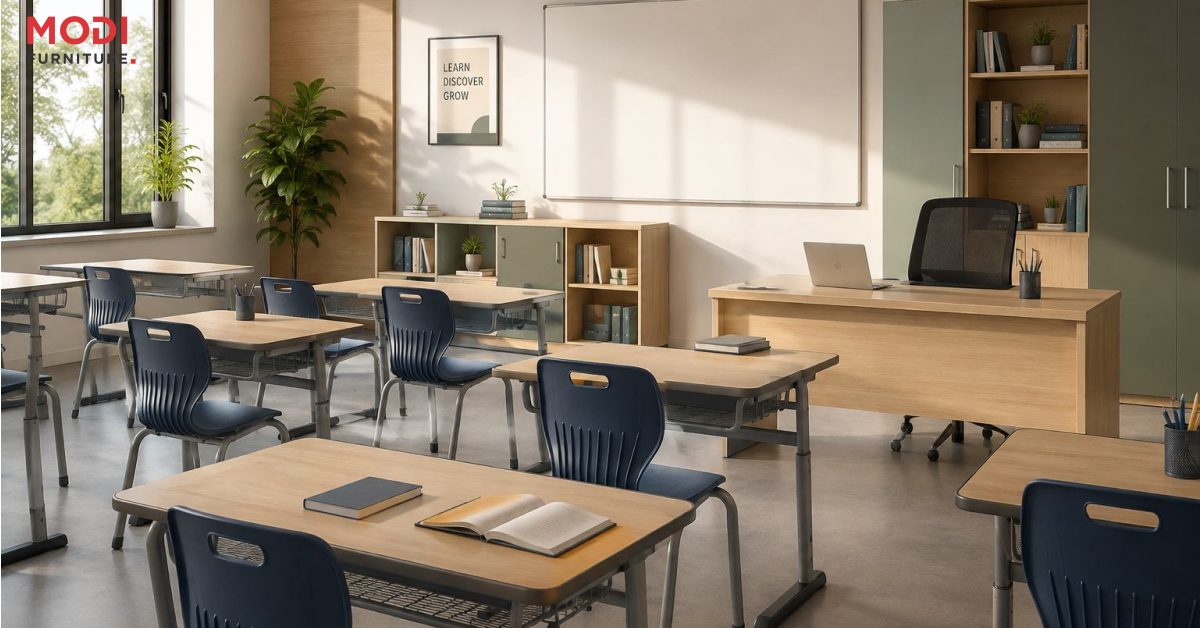
Classroom Furniture Guide: Choosing the Right Furniture for Schools
Creating an effective learning environment depends not only on teaching methods but also on the space in which students learn. Classroom Furniture is an important part of that environment because desks, chairs, storage units, and other educational furniture are used throughout the school day. Their size, design, comfort, safety, and durability can influence how comfortably students use the classroom.
The requirements of Furniture for Schools also change as students grow. A pre-primary classroom may need colorful, lightweight furniture, while senior classrooms generally require larger desks, supportive chairs, and layouts designed for focused study. Understanding these differences can help schools select furniture that suits each learning stage.
Choosing the Right Classroom Furniture for Different Learning Stages
Choosing the right classroom furniture requires understanding the different needs of students at each stage of their education. From pre-primary to senior classrooms, furniture should be selected based on age, comfort, ergonomics, safety, learning activities, and classroom space.
Pre-Primary Classroom Furniture
Pre-primary classrooms are designed around exploration, creativity, movement, and interactive learning. At this stage, furniture should support these activities while being easy for young children to use.
Lightweight desks and chairs can make it easier for teachers to rearrange the classroom for storytelling, games, group activities, and creative work. Safety should also be a priority, with smoothly finished surfaces, stable construction, and appropriately finished edges.
Storage is another useful consideration. Low-level shelves or storage units can keep books, toys, and learning materials within easy reach while helping children develop basic organizational habits.
Junior Classroom Furniture
As students move into junior classes, classroom activities become more structured and students spend more time reading, writing, and completing assignments. Furniture should therefore provide appropriate support while allowing students to work comfortably.
Desks and chairs should be selected according to students' height and size. Suitable desk height, adequate legroom, and supportive seating can make everyday classroom activities more comfortable.
Durability is equally important at this stage because desks and chairs experience regular use. Schools should look for sturdy construction and surfaces that can withstand routine cleaning and handling.
The arrangement of classroom seating also matters. A well-planned layout can provide teachers with clear access to students while leaving enough room for movement and collaborative activities.
Senior Classroom Furniture
Senior students generally spend longer periods reading, writing, attending lectures, and working on academic assignments. Their furniture should therefore focus on stability, working space, comfort, and efficient classroom organization.
Senior classroom desks should provide sufficient surface area for books, notebooks, and other study materials. Depending on the learning environment, schools may also need furniture that accommodates laptops or other educational devices.
Chairs should offer suitable back support and allow students to sit comfortably during longer lessons. The overall classroom arrangement should remain organized, with adequate space between desks for movement and clear visibility of teaching areas.
Unlike activity-focused younger classrooms, senior classrooms often benefit from a more structured layout that supports concentration and efficient use of space.
Also Read: https://www.modifurniture.com/blog/classroom-furniture-improves-student-learningKey Factors to Consider When Choosing Furniture for Schools
Regardless of the students' age group, schools should evaluate several practical factors before purchasing educational furniture.
1. Ergonomics and Comfort
Ergonomics is one of the most important considerations when selecting classroom desks and chairs. Furniture should correspond to students' body size and provide a comfortable working position.
- Schools should check:
- Appropriate seat and desk height
- Adequate legroom
- Supportive chair backs
- Sufficient desk space
- Easy movement in and out of seating
The objective is to choose furniture that allows students to sit, write, read, and participate in lessons comfortably.
2. Durability and Build Quality
School furniture is used repeatedly throughout the academic year, often by different groups of students. This makes construction quality an important part of the purchasing decision.
When comparing products, schools should examine the materials, frame strength, joints, surface finishes, and overall stability. Durable furniture can remain functional for longer and may offer better long-term value than products selected only on their initial cost.
3. Safety
Safety is particularly important in classrooms used by younger children, but it should remain a consideration at every educational level.
Furniture should have stable construction, properly finished surfaces, secure joints, and edges designed to minimize unnecessary hazards. Materials and finishes should also be appropriate for regular school use.
Schools should consider how furniture will interact with walkways and other classroom equipment to ensure that the overall arrangement remains safe and practical.
4. Flexibility
Modern classrooms may be used for individual work, group discussions, presentations, projects, and collaborative activities. Furniture that can be rearranged can make it easier to adapt the room to different teaching approaches.
Depending on the classroom, schools may consider movable desks, lightweight chairs, modular tables, or other furniture that allows layouts to change without significant effort.
5. Space Optimization
Available classroom space should be considered before selecting desks and chairs. Oversized furniture can make a room feel crowded, while poorly planned arrangements can restrict movement.
Schools should measure the classroom and plan space for:
- Student seating
- Teacher movement
- Walkways
- Learning activities
- Storage Doors and access points
Good space planning allows furniture to serve its purpose without compromising classroom movement.
6. Maintenance and Functionality
Furniture should be practical to clean, inspect, and maintain. Schools should consider surface finishes that can handle routine cleaning and construction that remains reliable under regular use.
Functionality is equally important. Depending on the classroom, useful features may include built-in storage, shelves, modular designs, or desks designed for specific learning activities.
Why Choosing the Right Manufacturer Matters
The quality of classroom furniture depends not only on its design but also on how consistently it is manufactured. Schools purchasing furniture in bulk should therefore assess the capabilities and experience of the manufacturer before making a decision.
When comparing school furniture manufacturers in Jaipur, schools can consider factors such as:
- Manufacturing experience
- Product range
- Construction quality
- Appropriate furniture dimensions
- Customization options
- Ability to handle institutional requirements
- Consistency across bulk orders
- Product specifications
- After-sales assistance
Choosing a manufacturer based on these practical factors can help schools find furniture that matches their classrooms, student age groups, and project requirements.
For schools evaluating Modi Furniture, the same approach applies. Consider the available product range, construction, dimensions, customization possibilities, and suitability for the intended educational environment rather than selecting furniture based solely on appearance.
How to Select the Right School Furniture in Jaipur
Schools looking for School furniture in Jaipur should begin by assessing their actual classroom requirements rather than choosing products simply because they look suitable.
A practical evaluation can include:
- Identify the age group and approximate student sizes.
- Measure each classroom before selecting furniture.
- Determine the required desk, chair, and storage types.
- Check comfort, dimensions, and ergonomic suitability.
- Examine construction quality and material durability.
- Review safety features and surface finishes.
- Consider how easily furniture can be rearranged or maintained.
- Compare manufacturers according to quality and institutional requirements.
This approach can help schools create classrooms that are comfortable, functional, organized, and suitable for everyday teaching.
Also Read: https://www.modifurniture.com/blog/school-furniture-manufacturers-in-jaipur-complete-buying-guide
Making the Right Classroom Furniture Decision
Selecting classroom furniture is a long-term decision because desks, chairs, and other educational products become part of the school's everyday learning environment. The right choice should reflect the age of students, classroom activities, available space, maintenance needs, and expected level of use.
Whether a school is furnishing a pre-primary room, upgrading junior classrooms, or creating structured senior learning spaces, furniture should balance comfort, safety, durability, functionality, and space efficiency.
For schools, investing time in comparing suitable products and experienced school furniture manufacturers in Jaipur can make the purchasing process more practical and help ensure that the selected furniture supports the way students and teachers actually use their classrooms.
Frequently Asked Questions
1. What should schools consider when choosing Classroom Furniture?
Schools should consider student age, furniture dimensions, comfort, ergonomics, safety, durability, classroom space, maintenance, storage, and how the furniture will be used during different activities.
2. What type of furniture is suitable for pre-primary classrooms?
Pre-primary classrooms generally benefit from appropriately sized desks and chairs, stable construction, safely finished surfaces, and accessible storage. Lightweight furniture can also make it easier to create activity-based classroom layouts.
3. How can schools choose durable Furniture for Schools?
Schools should examine material quality, frame construction, joints, surface finishes, stability, and the manufacturer's ability to provide consistent construction. Furniture should be selected according to the level of daily institutional use.
4. Why should schools compare experienced school furniture manufacturers?
An experienced manufacturer can offer a suitable product range, consistent dimensions, customization options, and solutions for bulk institutional requirements. Schools should compare manufacturers based on these capabilities and their specific project needs.
-

School Furniture Checklist: Everything Needed for a Modern School
September 16th, 2026 -

Modern Office Tables in Jaipur: A Guide to Premium Workspace Solutions
August 19th, 2026 -
 July 27th, 2026
 -
 July 27th, 2026
