
Furniture Manufacturing Process: How Furniture is Made?
Furniture is an important part of our home, it makes our house or workplace more functional. But have you ever thought about exactly how your favourite chair or desk is made? The process of furniture manufacturing is an exciting journey from raw materials to finished products. In this blog, we will explore the furniture manufacturing process and understand how high-quality furniture is created. Modi Furniture is a leading furniture manufacturer in Jaipur, known for delivering quality office furniture, chairs, and steel furniture solutions.
The manufacturing of furniture involves a combination of creativity, engineering, skilled craftsmanship, and advanced production techniques. Every stage of furniture production plays an important role in ensuring that the final product is durable, comfortable, aesthetically appealing, and suitable for long-term use. Understanding how furniture is made helps customers appreciate the attention to detail involved in creating quality furniture.
Step 1: Design and Planning
The furniture manufacturing process initiates with design and planning. At Modi Furniture, a team of skilled designers works on creating innovative and functional designs that meet customers’ needs, be it office furniture in Jaipur or urban steel furniture in Jaipur. The design phase becomes very crucial. Such designers consider ergonomics, aesthetics, and the materials to be used.
Every successful manufacturing of furniture project begins with thorough research, planning, and concept development. Before the actual manufacturing begins, detailed planning is carried out to determine dimensions, functionality, storage requirements, and user comfort. Modern furniture manufacturers often use computer-aided design (CAD) software and 3D visualization tools to create prototypes before production starts. This helps reduce errors and ensures that the final product meets customer expectations.
Proper planning also allows manufacturers to optimize material usage, reduce production waste, and improve overall efficiency throughout the furniture manufacturing process.
Step 2: Material Selection
Material is the secondary factor after choosing the design. Basically, materials depend on the process of furniture making. If you choose steel furniture then it’ll be made from superior-quality steel which is extremely durable and resistant to corrosion. Woods, fabrics, and foams are also chosen carefully to ensure quality and comfort.
Modi Furniture is the best one when it comes to raw material selection. The wood that is used in manufacturing undergoes seasoning so that it does not warp or crack. Treatment of the steel makes it strong and long-lasting. Only those materials which exude both style and strength become the top choice for office furniture in Jaipur.
Material selection is one of the most critical stages in furniture production because the quality of raw materials directly impacts durability, performance, and appearance. Manufacturers evaluate factors such as strength, moisture resistance, load-bearing capacity, maintenance requirements, and environmental conditions before selecting materials.
Common materials used in furniture manufacturing include solid wood, engineered wood, steel, aluminum, glass, laminates, fabrics, foam, and upholstery materials. Choosing the right combination of materials ensures both functionality and longevity.
Step 3: Cutting and Shaping
Basically, materials need to be selected, after which they are required to be cut and shaped according to design specifications. Cutting can be considered one of the more skill-intensive tasks. At Modi Furniture, advanced machinery is used for cutting every piece of material. It could be a chair leg, a tabletop, or even a steel frame; every component is crafted with utmost care.
For chair manufacturers like Modi Furniture in Jaipur, shaping has intricate details, especially in the creation of ergonomic chairs that help provide maximum comfort. Curves, edges, and other design elements that give furniture its appearance are all part of the shaping process.
Precision cutting is essential because even minor measurement errors can affect the assembly and functionality of the final product. Modern machinery helps achieve consistency, accuracy, and minimal material wastage during this stage of furniture production. Shaping also contributes significantly to aesthetics, ensuring that furniture not only performs well but also complements modern interior spaces.
Step 4: Assembly
Once all the individual components are cut and shaped, the next step is to assemble these pieces into a single final product. Modi Furniture’s skilled craftsmen take great care in gathering every single piece so that everything fits together properly. This step becomes especially crucial for office furniture in Jaipur, as it has to be rugged enough for everyday use.
Various techniques like welding, gluing, and screwing are used during the assembly step. In the case of steel furniture in Jaipur, welding is a preferred method to strongly and permanently join metal parts. Hardware items such as hinges, handles, and screws are also installed during this stage.
Assembly is one of the most important phases in the manufacturing of furniture because it directly impacts structural strength and durability. Proper assembly ensures that furniture can withstand regular use without compromising safety or performance.
Skilled technicians inspect every connection point during assembly to ensure stability and long-term reliability.
Step 5: Finishing
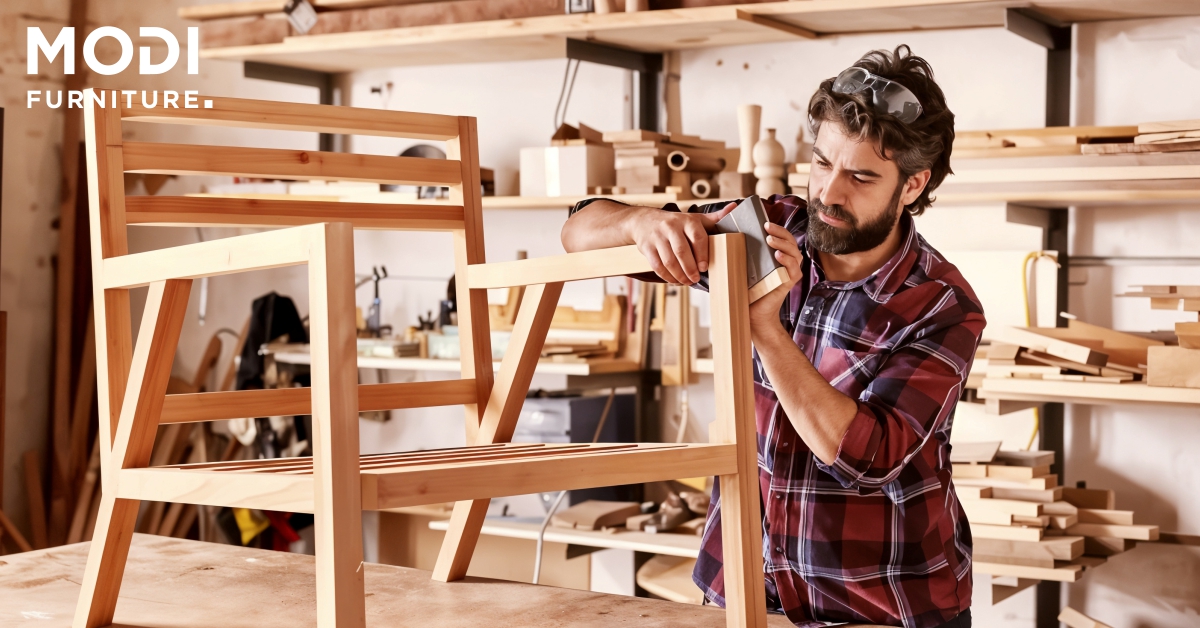
Finishing processes give the final touch and feel to the furniture. It involves techniques like sanding, staining, painting, and polishing. Finishing is taken care of in great detail at Modi Furniture.
Sanding is used on wooden furniture to make it smooth. Staining or painting brings colour into it and provides protection. The finishing process for steel furniture in Jaipur is different; either powder coating or paint is applied to the metal to prevent rust and improve its appearance. This process also includes upholstery work for chairs and sofas, providing them with comfortable and attractive surfaces.
Finishing not only improves the visual appeal of furniture but also increases resistance to moisture, scratches, stains, and everyday wear and tear. High-quality finishing can significantly extend the lifespan of furniture products.
Powder coating and premium surface treatments are commonly used in modern furniture production to ensure durability and long-lasting performance.
Step 6: Quality Inspection
Before any piece of furniture leaves the Modi Furniture factory, it undergoes a strict quality inspection. Only after proper inspection can any product conform to the high standards of the company regarding durability, comfort, and style.
Inspectors check for defects such as uneven surfaces, loose joints, and imperfect finishes. The prime aspect of office furniture in Jaipur is quality since it undergoes heavy daily usage. Modi Furniture takes pride in delivering products that are both visually appealing and long-lasting.
Quality control is a critical part of the furniture manufacturing process. Every product is carefully evaluated for strength, dimensions, finish consistency, functionality, and safety standards before approval.
Comprehensive quality inspections help reduce product defects and ensure customer satisfaction by delivering reliable furniture solutions.
Step 7: Packaging and Delivery
Packaging and delivery is the final process of furniture manufacturing. The qualified furniture, after quality inspection, is carefully packaged to avoid damage during transportation. Modi Furniture uses quality packaging materials to prevent transportation-related damage.
Be it a chair manufacturer in Jaipur or a steel furniture dealer in Jaipur, the safe delivery of products is of prime concern. Modi Furniture ensures that products are delivered on time to all customers, whether for homes or offices.
Packaging is often an overlooked but important aspect of the manufacturing of furniture. Proper packaging is an often-overlooked aspect of furniture production. Protective packaging materials help prevent scratches, dents, and other damage during transit. Efficient logistics management further ensures that furniture reaches customers safely and in excellent condition.
Importance of Modern Furniture Manufacturing
The manufacturing of furniture has evolved significantly over the years. Today, manufacturers combine traditional craftsmanship with advanced technology to improve efficiency, precision, and product quality. Modern furniture production focuses not only on aesthetics but also on ergonomics, sustainability, and long-term durability.
The growing demand for office furniture, ergonomic chairs, workstations, storage solutions, and steel furniture has encouraged manufacturers to adopt innovative production methods. By investing in advanced machinery and skilled labor, furniture manufacturers can consistently deliver products that meet customer expectations.
Why Does Modern Furniture Manufacturing Matters?
Modern furniture manufacturing combines traditional craftsmanship with advanced technology to create products that meet evolving customer expectations. Today’s furniture production focuses on durability, sustainability, functionality, and aesthetic appeal.
Manufacturers continuously invest in better machinery, improved production methods, and quality control systems to deliver furniture that offers long-term value. Whether it is office furniture, ergonomic chairs, workstations, storage units, or steel furniture, modern manufacturing practices help ensure consistent quality and performance.
Conclusion
The process of furniture manufacturing is intricate, involving careful attention to detail at every stage to transform raw materials into functional and beautiful products. Modi Furniture is one of the most sought-after chair manufacturers in Jaipur and specializes in quality office furniture and steel furniture solutions.
From design and material selection to assembly, finishing, quality inspection, and delivery, every stage is carried out with care and precision. This ensures that customers receive furniture that not only meets their requirements but also stands the test of time.
As the furniture manufacturing industry continues to evolve, modern production techniques and skilled craftsmanship remain equally important. By focusing on quality materials, precision manufacturing, and customer satisfaction, furniture manufacturers can create products that deliver both functionality and long-term value. Choosing a trusted furniture manufacturer ensures that you invest in furniture designed for performance, comfort, and durability.
Frequently Asked Questions (FAQs)
What is the furniture manufacturing process?
The furniture manufacturing process includes design, material selection, cutting, shaping, assembly, finishing, quality inspection, packaging, and delivery.
How is furniture made?
Furniture is made by transforming raw materials such as wood, steel, fabric, and foam into finished products through a series of manufacturing and quality-control processes.
What materials are commonly used in furniture production?
Common materials include solid wood, engineered wood, steel, aluminum, laminates, fabric, glass, and upholstery materials.
Why is quality inspection important in furniture manufacturing?
Quality inspection helps identify defects, ensures durability, improves safety, and maintains customer satisfaction.
What makes quality furniture durable?
High-quality materials, precise manufacturing techniques, proper assembly, effective finishing, and rigorous quality control contribute to furniture durability.
-

School Furniture Checklist: Everything Needed for a Modern School
September 16th, 2026 -
Classroom Furniture Guide: Choosing the Right Furniture for Schools
September 2nd, 2026 -
Modern Office Tables in Jaipur: A Guide to Premium Workspace Solutions
August 19th, 2026 -
 July 27th, 2026
