
How to Adjust Chair Height Correctly for Better Posture
Getting your chair height and posture right is a small change that makes a huge difference for your health and focus.
This guide will walk you through everything you need to know. We’ll show you how to adjust any type of office chair, from a standard model to a modern ergonomic chair, to create the perfect setup for your body.
The Foundation of Comfort: Why Correct Chair Height Matters
Before you start pulling levers, it’s good to know why this matters so much. Proper chair height is the first step to good ergonomics, which is simply about setting up your workspace to fit your body, not the other way around. A correct setup prevents strain, reduces the risk of back pain, and helps you concentrate better throughout the day.
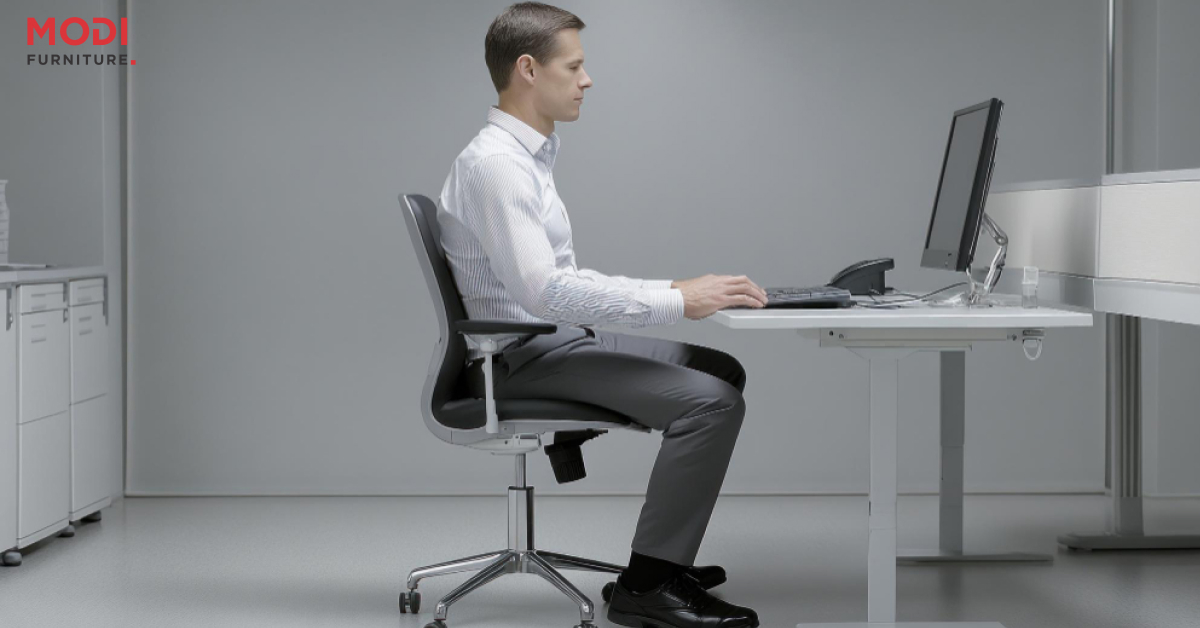
The 90-Degree Angle Rule: Your North Star for Perfect Posture
The easiest way to find the right height is to follow the 90-degree angle rule. This is a simple guideline for a healthy seated posture:- Your feet should be flat on the floor.
- Your knees should be bent at a 90-degree angle, level with or slightly below your hips.
- Your elbows should also be at a 90-degree angle when your hands are on your desk.
Common Health Issues Caused by Improper Chair Height
When your chair is too high or too low, it puts stress on your body. A chair that’s too high can cut off circulation in your legs, while a chair that’s too low can cause neck and shoulder pain as you hunch over your desk. Over time, this can lead to chronic pain and posture problems.
Benefits of a Proper Ergonomic Workstation Setup
Taking a few minutes to adjust your chair pays off. You’ll feel more comfortable and energized, which can lead to better productivity. A good office workstation table setup also reduces the risk of long-term injuries, helping you stay healthy and focused on your work. At Modi Furniture, we believe a well-adjusted chair is an investment in your well-being.
How to Adjust Office Chair Height: The Standard Pneumatic Lever
Most office chairs use a gas cylinder with a simple lever for height adjustment. If you see a paddle-like lever under your seat, this is for you.
Step 1: Stand Up to Raise the Chair
To make the chair go up, stand up to take your weight off of it. Then, pull the lever upwards. The chair will rise on its own. Release the lever when it reaches the height you want.
Step 2: Sit Down to Lower the Chair
To lower the chair, sit down and pull the lever up. Your body weight will push the seat down. Let go of the lever once your feet are flat on the floor and your knees are at that perfect 90-degree angle.
Step 3: Fine-Tuning Your Height Relative to Your Desk
Now, check your arm position. Sit close to your desk. Your elbows should be at a 90-degree angle, with your forearms parallel to the floor. If they are too high or low, you may need to adjust your desk height or consider a keyboard tray.
Pro Tip: Check Your Chair Casters and Floor Type
The type of wheels (casters) on your chair and your flooring can affect your final height. Softer casters on a hard floor can sink slightly, so always do your final adjustments while you are in your normal working position.
No Lever? How to Adjust Chair Height on Different Mechanisms
What if your chair doesn't have an obvious lever? Some older or simpler chairs use a different system for height adjustment.
Adjusting a Chair with a Spin Mechanism (Threaded Post)
Many leverless chairs use a threaded post. To adjust the height, you simply need to spin the chair.- To raise it: Spin the chair counter-clockwise.
- To lower it: Spin the chair clockwise. You will need to turn it several times to see a noticeable change.
What to Do if Your Leverless Chair is Stuck
If a spin-mechanism chair is stuck, it might be due to rust or overtightening. Try applying a little lubricant like WD-40 to the threaded post. A firm grip and steady pressure should get it moving again.
Identifying Your Chair's Adjustment Type
Look under the seat cushion. If you see a lever, you have a pneumatic chair. If you see a large, threaded metal rod connecting the seat to the base, it's a spin mechanism.
The Complete Ergonomic Tune-Up: Adjusting Your Chair Back and More
Proper height is just the start. For true comfort, you need to adjust the other parts of your chair, especially the back support. High-quality ergonomic chairs from brands like Sihoo or Herman Miller offer multiple adjustment points.
How to Adjust Chair Back Angle and Tension
Most office chairs have a knob or lever that lets you recline. Another knob, usually a large one under the seat, controls the tension. Tighten it for more resistance when you lean back, or loosen it for an easier recline.
How to Adjust the Back Height for Optimal Lumbar Support
The curve in the chair's backrest should fit perfectly into the small of your back. Some chairs have a backrest that slides up and down. Adjust it so the lumbar support cradles your lower back, encouraging a natural spine curve.
Setting the Correct Armrest Height and Width
Your armrests should be positioned so your shoulders are relaxed, not hunched. Adjust them to the same height as your desk, allowing your elbows to remain at a 90-degree angle. This takes the strain off your neck and shoulders.
Adjusting Seat Pan Depth and Tilt
Some chairs let you slide the seat forward or backward. You should have about two to three fingers of space between the back of your knees and the edge of the seat. A seat tilt feature can also help you find a more comfortable and active sitting position.
Under the Hood: How Does Chair Height Adjustment Work?
Ever wondered what's happening inside your chair when you pull that lever? Understanding the simple mechanics can help you troubleshoot problems down the line.
The Magic of the Pneumatic Gas Cylinder
The most common mechanism is a pneumatic gas cylinder. This is a sealed tube filled with pressurized nitrogen gas. When you pull the lever, it opens a valve. Your body weight compresses the gas to lower the seat, and the gas expands to raise it when your weight is removed.
Mechanical vs. Pneumatic Chairs: What's the Difference?
Mechanical chairs use a threaded post (the spin mechanism we discussed earlier). They are very durable but harder to adjust quickly. Pneumatic chairs are the modern standard because they allow for fast and easy height changes.
Common Points of Failure and What They Mean
If your chair starts sinking or won't stay up, the seal inside the gas cylinder has likely failed. This is the most common issue with pneumatic chairs and means the cylinder can no longer hold pressure.
Your Ecosystem: Integrating Your Chair with Your Workspace
Your chair is part of a larger system that includes your desk, monitor, and keyboard. For a truly ergonomic setup, all these elements need to work together.
Is Your Desk Height the Real Problem?
Sometimes, you can't get your chair in the right position because your desk is too high or too low. If your desk is not adjustable, you may need to adjust your chair to the desk and then use other tools to support your body.
When and How to Use a Footrest Correctly
If you have to raise your chair to match a high desk and your feet no longer touch the ground, a footrest is the perfect solution. It provides a stable surface for your feet, ensuring your knees stay at that important 90-degree angle.
Pairing Your Ergonomic Chair with a Standing Desk
A height-adjustable desk, or standing desk, is a great partner for an ergonomic chair. It allows you to set the perfect desk height for your seated position and gives you the option to stand, which is great for circulation and breaking up long periods of sitting.
Proper Monitor Height and Placement
Your monitor should be directly in front of you, about an arm's length away. The top of the screen should be at or slightly below eye level. This prevents you from craning your neck up or hunching down to see.
Troubleshooting & DIY Solutions for Common Chair Problems
Even the best chairs can have issues. Here are a few practical fixes for common problems you might run into.
My Office Chair Keeps Sinking: How to Fix It
A sinking chair is almost always caused by a failing gas cylinder. While replacing the cylinder is the best long-term fix, a quick DIY solution is to set the chair to your desired height and clamp a hose clamp or a piece of PVC pipe around the visible part of the cylinder post. This will physically stop it from sliding down.
DIY Solution: What to Do If Your Chair is Still Too Low
If your chair is at its maximum height but still too low for your desk, a firm seat cushion can give you an extra inch or two. Make sure it's a supportive cushion that doesn't compress too much.
DIY Solution: What to Do If Your Chair is Too High for Your Desk
If your chair is too high at its lowest setting, the easiest fix is to add a footrest. For a simple DIY solution, you can use a sturdy box or a few wood blocks to support your feet.
When Is It Time to Replace Your Chair's Gas Cylinder?
If your chair sinks, won't adjust, or wobbles excessively, it’s probably time to replace the gas cylinder. It’s a fairly simple repair you can do at home with a pipe wrench and a mallet, and replacement cylinders are available online from places like Amazon or Home Depot.
A Few Minutes for All-Day Comfort
Achieving the perfect ergonomic setup isn't complicated. Start with the 90-degree angle rule to set your chair height, then fine-tune your chair back, lumbar support, and armrests to fit your body. Taking just a few minutes to make these adjustments can completely change your workday, preventing pain and improving your overall well-being. So take a moment right now—your back will thank you for it.
Frequently Asked Questions (FAQ)
What is the correct height for an office chair?
The correct height for an office chair allows your feet to be flat on the floor with your knees at a 90-degree angle, and your thighs parallel to the ground. Your arms should also form a 90-degree angle when resting on your desk.
How do you adjust the back of an office chair?
Most ergonomic chairs have a separate lever or knob to adjust the backrest angle (recline) and another to adjust the backrest height. Unlock the lever, set your desired position, and lock it back in place for proper lumbar support.
How do I know if my chair is too high?
Your chair is too high if your feet are dangling or only your toes can touch the floor. This can cause pressure on the back of your thighs and poor circulation. Your knees should be level with or slightly below your hips.
Why won't my office chair stay up?
If your office chair keeps sinking, it's typically due to a failing pneumatic gas cylinder. The seal inside the cylinder is likely worn out and can no longer hold the pressure required to maintain the chair's height.
Can you manually raise an office chair without a lever?
Yes, if your chair has a threaded post or spin mechanism. To raise it, you need to spin the entire chair counter-clockwise while it's on the ground. To lower it, spin it clockwise.
How do you force an office chair cylinder down?
If a chair is stuck in the highest position, sit on it with your full weight while repeatedly pulling and releasing the height adjustment lever. You may need to bounce slightly to apply enough force to release the cylinder.
What is the 90-degree angle rule for sitting?
The 90-degree angle rule is a guideline for an ideal ergonomic posture. It suggests keeping your elbows, hips, and knees bent at approximately a 90-degree angle, with your feet flat on the floor.
Should my arms be on the desk or armrests?
Your armrests should be at a height that allows your shoulders to be relaxed and your elbows to be at a 90-degree angle, just level with your desk. Your forearms can then rest comfortably on the armrests while you type, reducing strain.
Do I need a footrest for my office chair?
You need a footrest if your desk is too high to be lowered and, after adjusting your chair to the correct height for the desk, your feet cannot rest flat on the floor. A footrest bridges this gap to maintain proper posture.
How do you adjust the lumbar support on a Sihoo chair?
On many Sihoo models like the M57 or Doro C300, the lumbar support can be adjusted vertically (up and down) by simply sliding it. Some models also have a depth adjustment knob to increase or decrease the pressure on your lower back.
-

School Furniture Checklist: Everything Needed for a Modern School
September 16th, 2026 -

Classroom Furniture Guide: Choosing the Right Furniture for Schools
September 2nd, 2026 -

Modern Office Tables in Jaipur: A Guide to Premium Workspace Solutions
August 19th, 2026 -
 July 27th, 2026
