
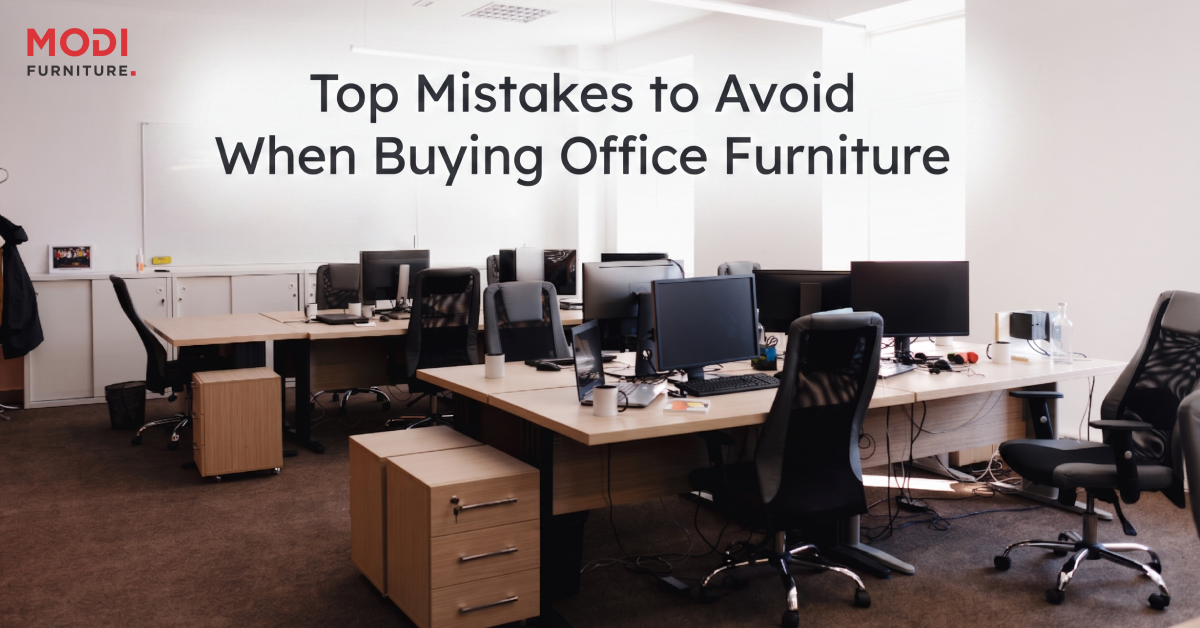
Top Mistakes to Avoid When Buying Office Furniture
Office furniture plays a much bigger role in workplace productivity than many businesses realize. The right furniture setup supports employee comfort, improves workspace organization, and creates a professional environment for both employees and clients.
Despite this, many companies still make furniture buying decisions based only on pricing or appearance. This often leads to uncomfortable workspaces, poor functionality, and repeated replacement costs over time.
Modern offices across India are evolving rapidly. Businesses are redesigning workspaces to support hybrid work culture, employee wellness, collaborative layouts, and efficient space management. As a result, office furniture selection now requires proper planning rather than quick purchasing decisions.
Understanding common office furniture buying mistakes can help businesses create more functional, comfortable, and long-lasting workspaces.
Why Office Furniture Selection Matters More Than Ever?
Workspaces today are expected to support multiple functions at once. Employees spend long hours at desks, attend virtual meetings, collaborate in shared spaces, and handle technology-heavy workflows throughout the day.
Poor furniture planning can affect posture, comfort, movement, storage efficiency, and even employee productivity. Businesses are now recognizing that furniture directly contributes to workplace experience and operational efficiency.
Modern office furniture is no longer selected only for aesthetics. Companies are focusing more on ergonomics, durability, flexibility, and efficient workspace utilization.
Common Office Furniture Buying Mistakes Businesses Still Make
Many office furniture issues begin with rushed purchasing decisions and lack of workspace planning.Ignoring Workspace Planning
One of the most common mistakes businesses make is buying furniture before properly planning office layouts.
Without accurate workspace measurements and layout planning, offices can quickly feel overcrowded and disorganized. Furniture should support movement, workflow efficiency, and collaborative working without making the office feel cramped.
Prioritizing Price Over Quality
Budget is important, but focusing only on low pricing often creates long-term problems.
Low-quality office furniture may require frequent repairs or replacements, increasing overall expenses over time. Businesses now prefer investing in durable office furniture that offers better long-term value and workplace reliability.
Overlooking Ergonomics
Employee comfort directly affects daily productivity. Poorly designed chairs and desks can lead to posture-related issues, discomfort, and reduced concentration during work hours.
Ergonomic office furniture has become one of the biggest priorities for modern businesses. Adjustable seating, proper desk height, lumbar support, and flexible workstations are now considered essential features rather than luxury additions.
Choosing Furniture Without Storage Planning
Storage is often overlooked during office setup planning. Insufficient storage creates cluttered workspaces that reduce efficiency and affect organization.
Modern office furniture solutions now include integrated storage systems, modular cabinets, and smart workspace organization features that help maintain cleaner office environments.
Ignoring Future Office Expansion
Many businesses purchase furniture based only on current office needs without considering future growth.
As teams expand, poorly planned furniture setups can create space limitations and inconsistent office layouts. Flexible and modular office furniture solutions help businesses adapt more easily to changing workspace requirements.
Selecting Style Over Functionality
Modern office interiors are becoming more visually appealing, but appearance should never come at the cost of functionality.
Stylish furniture that lacks comfort, durability, or practical usability often becomes a long-term workspace issue. Businesses should balance aesthetics with daily operational needs.
Not Considering Employee Comfort
Employees spend several hours at workstations every day. Furniture that feels uncomfortable during long working hours can negatively affect morale and productivity.
Businesses investing in employee-focused office furniture often create healthier and more productive work environments.
Buying Furniture Without Measuring Office Space
Oversized desks, bulky storage units, and poorly fitted furniture can disrupt office movement and workspace efficiency.
Measuring office dimensions before purchasing furniture helps businesses avoid unnecessary layout problems and ensures better space utilization.
Modern Office Furniture Trends Businesses Should Know in 2026 Office
furniture trends in India are shifting toward more flexible, ergonomic, and space-efficient solutions.
Ergonomic Office Setups
Businesses are prioritizing ergonomic office chairs, height-friendly desks, and posture-supportive furniture designs to improve employee comfort and wellness.
Modular Office Furniture Solutions
Modular furniture is becoming increasingly popular because it allows businesses to optimize layouts and adapt workspaces more efficiently.
Space-Saving Furniture Designs
Compact workstations, multi-purpose storage units, and flexible desk systems are helping businesses maximize office space utilization.
Sustainable Furniture Choices
Durable materials and long-lasting furniture solutions are influencing modern buying decisions as businesses focus more on sustainability and long-term value.
Hybrid Workspace Planning
Hybrid work culture continues shaping office layouts across India. Flexible furniture setups now support collaborative spaces, home-office integration, and adaptable workspace planning.
How to Choose the Right Office Furniture for Your Workspace?
Choosing office furniture requires a balance between comfort, practicality, and workspace aesthetics.
Businesses should evaluate:
- Workspace dimensions
- Employee requirements
- Storage needs
- Ergonomic support
- Material durability
- Flexibility for future growth
- Workspace layout efficiency
Furniture selection should support both daily workflow and long-term workspace planning.
Why Do Businesses Prefer Quality Office Furniture Manufacturers?
The quality of office furniture depends heavily on design standards, manufacturing quality, and material selection.
Businesses increasingly prefer experienced office furniture manufacturers that understand modern workspace requirements and evolving office trends. Reliable manufacturers provide better customization options, durable furniture solutions, and long-term value.
As office environments continue evolving, companies are becoming more strategic about investing in office furniture that supports productivity, comfort, and workplace efficiency.
Final Thoughts
Buying office furniture involves much more than selecting desks and chairs. Every furniture decision affects employee comfort, workspace organization, productivity, and long-term operational efficiency.
Businesses that avoid common furniture buying mistakes often create more organized, functional, and future-ready workspaces. With modern office trends focusing heavily on ergonomics, flexibility, and efficient space planning, investing in the right office furniture has become an essential part of workplace development.
FAQs
Why is ergonomic office furniture important?
Ergonomic office furniture helps improve posture, reduce discomfort, and support employee productivity during long working hours.
What should businesses consider before buying office furniture?
Businesses should evaluate workspace size, employee requirements, storage needs, comfort, durability, and future office expansion plans.
Why do low-quality office furniture setups create long-term problems?
Low-quality furniture often wears out quickly, requires frequent replacements, and may negatively affect employee comfort and workspace efficiency.
What is modular office furniture?
Modular office furniture includes flexible furniture systems that can be rearranged or expanded based on changing workspace requirements.
How do modern office furniture trends improve workspaces?
Modern office furniture trends focus on ergonomics, flexibility, storage efficiency, and better workspace organization to improve productivity and employee experience.
-

School Furniture Checklist: Everything Needed for a Modern School
September 16th, 2026 -
Classroom Furniture Guide: Choosing the Right Furniture for Schools
September 2nd, 2026 -
Modern Office Tables in Jaipur: A Guide to Premium Workspace Solutions
August 19th, 2026 -
 July 27th, 2026
